Can a Contractor Be Held Liable If Restoration Work Fails Inspection After the Job Is Called Done in Washington?
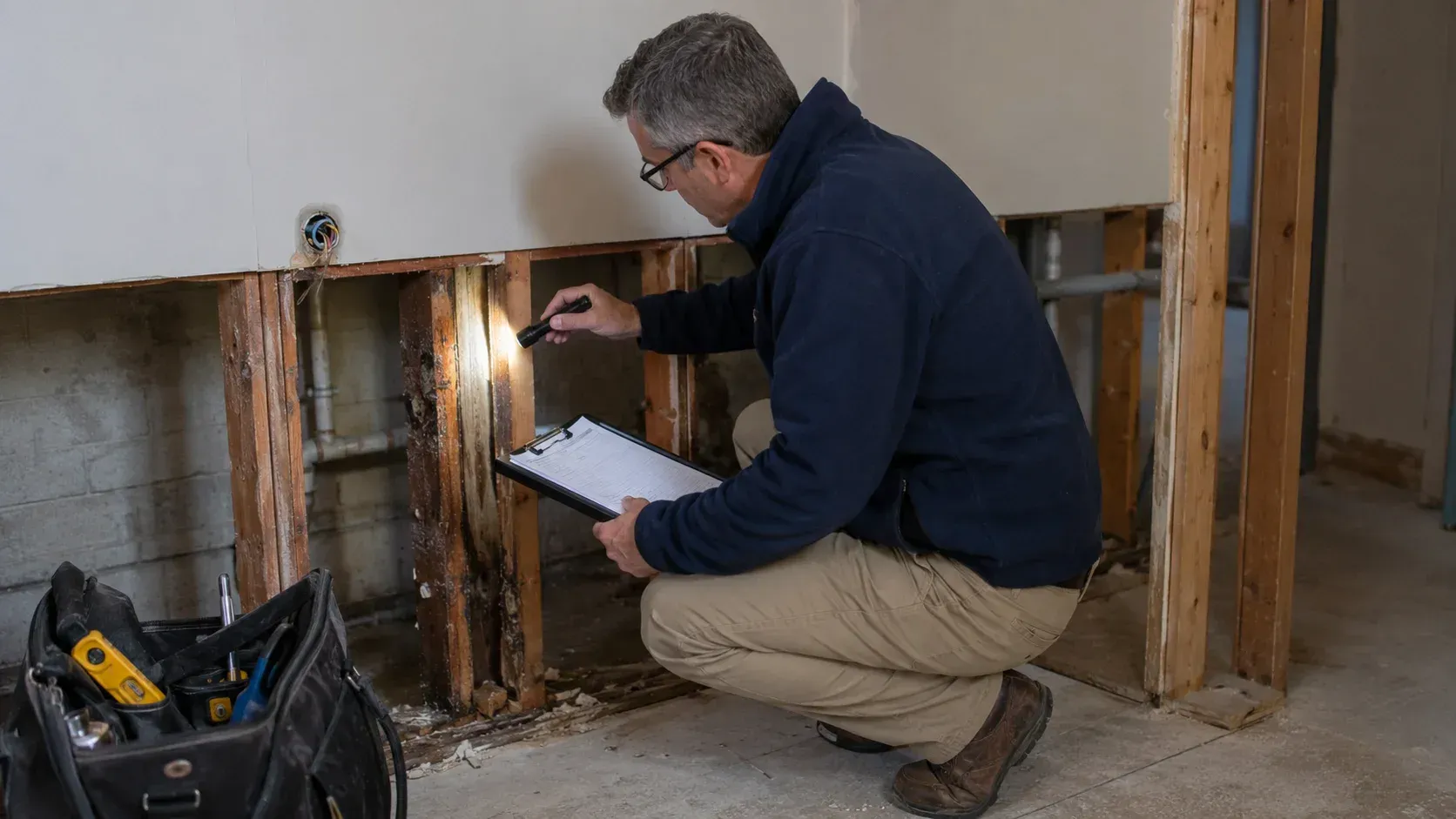
Table of Contents
- The Short Answer
- What "The Job Is Done" Actually Means
- Where a Contractor's Responsibility Comes From in Washington
- A Realistic Scenario
- How to Evaluate Your Situation
- Conclusion
- Have Questions About a Failed Inspection in Sammamish?
- Frequently Asked Questions
Key Takeaways
- A contractor can often still be held responsible for restoration work that fails inspection after the job is called done, because "done" is not the same as "code compliant" or "accepted."
- Liability usually turns on the written contract, the scope of work, permit and code requirements, and Washington's contractor registration and bonding rules, not on whether the contractor said the work was finished.
- Washington registered contractors carry a bond, and homeowners have a defined process through the Department of Labor and Industries if a dispute cannot be resolved directly.
- A failed inspection is documentation. An independent report showing what failed and why is often the most useful thing a homeowner can bring to a conversation, a claim, or an attorney.
- Time limits apply. Warranty periods, bond claim windows, and the statute of limitations all affect what options remain, so acting promptly matters.
Introduction
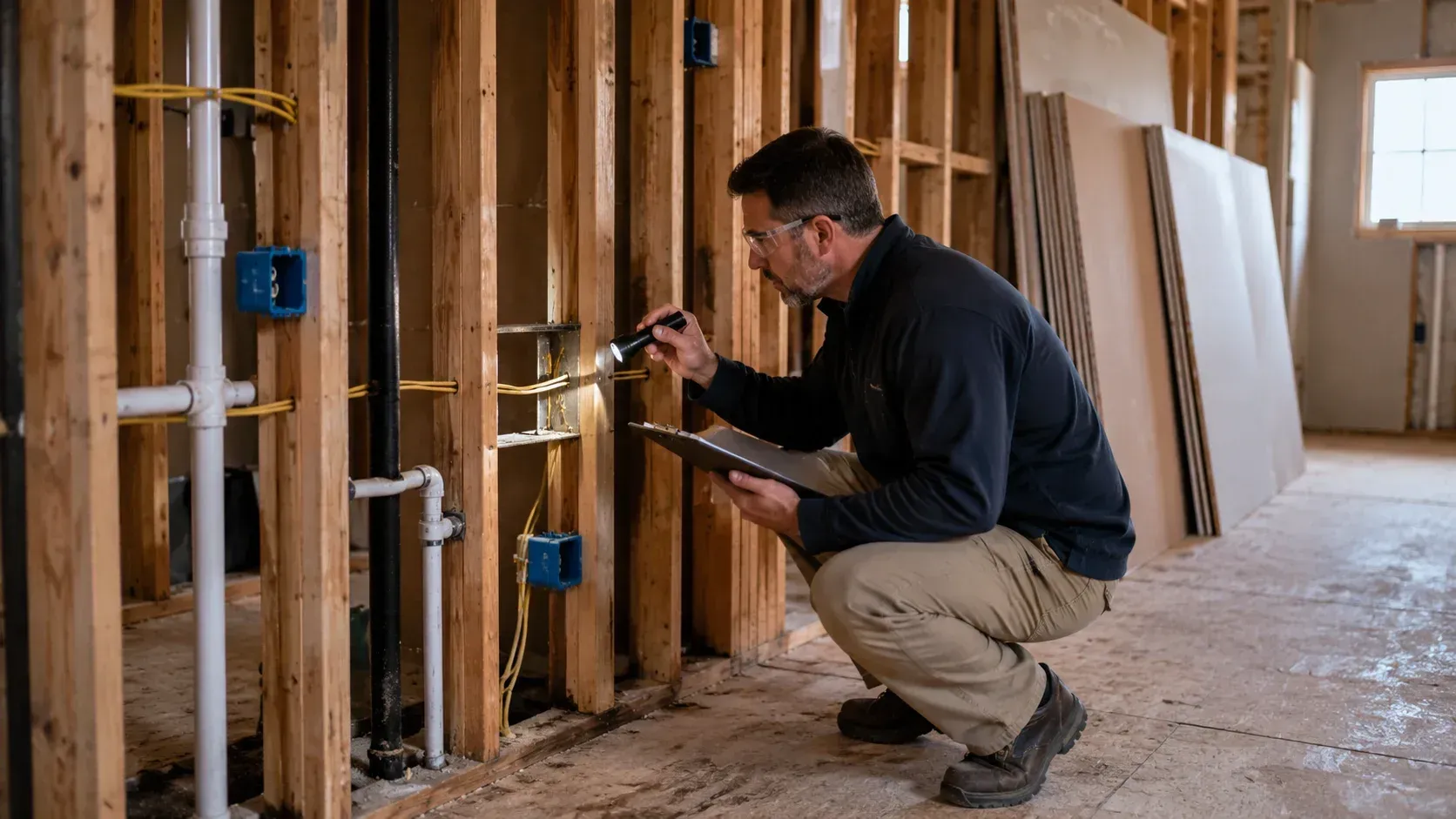
Yes, a contractor can often still be held liable if restoration work fails inspection after the job is called done in Washington. Calling a job complete does not release a contractor from responsibility for work that does not meet the contract, the building code, or the standard a reasonable professional would deliver, which is exactly why an independent restoration inspection after the work matters so much.
This question usually comes up at a stressful moment. The repair or restoration is finished, the invoice is paid or nearly paid, and then a city inspector, a buyer's inspector, or a bank's inspector flags something that does not pass. Knowing where responsibility sits, and how Washington's rules treat the situation, helps you decide your next move without panic. This article explains what "done" really means, where liability comes from, and the practical steps that tend to protect homeowners.
The Short Answer
In Washington, a contractor's responsibility for restoration work is generally defined by the contract and the applicable building codes, not by the contractor's statement that the job is finished. If the work fails a legitimate inspection because it does not meet those standards, the contractor can usually be held liable to correct it.
The reason is simple. A completion date marks when the contractor stopped working, not when the work was verified as correct. If a roof repair leaks, a foundation patch cracks, or reconstructed framing does not meet code, the defect existed regardless of what the invoice said.
That said, "can be held liable" is not the same as "will automatically be forced to pay." The outcome depends on the paperwork, the type of defect, the timeline, and how the homeowner documents and pursues the issue. Those variables are where most of the real questions live.
What "The Job Is Done" Actually Means
Homeowners and contractors often mean different things by "done," and the gap causes disputes.
To a contractor, done may mean the crew finished the scope they believed they were hired for. To a homeowner, done should mean the work is complete, permitted where required, and able to pass any inspection tied to it. Those are not always the same thing.
In construction terms, there is a difference between substantial completion (the work is usable and mostly finished) and final acceptance (the work has been verified and formally accepted). A project can reach substantial completion and still fail a final inspection. Payment does not equal acceptance either. Paying an invoice does not waive your right to have defective work corrected, though how you paid and what you signed can matter.
This distinction is the heart of the issue. A contractor calling the job done is a statement, not a verdict. An inspection is closer to a verdict, and that is why a failed inspection carries weight.
Where a Contractor's Responsibility Comes From in Washington
A contractor's liability for restoration work fails inspection situations usually flows from several overlapping sources. Understanding them helps you see which one applies to you.
The Written Contract
The contract is the first place to look. A clear scope of work, a description of materials, references to code compliance, and any workmanship warranty all define what the contractor promised. If the failed item falls inside that promise, responsibility is usually straightforward.
Building Codes and Permits
Restoration and repair work often requires permits, and permitted work must pass municipal inspection. In Washington, local jurisdictions enforce the state building code. If work that needed a permit was done without one, or fails the permit inspection, that is typically the contractor's responsibility to resolve, especially if they handled the permitting.
Implied Warranty of Workmanship
Even without a written warranty, Washington recognizes a general expectation that construction work will be performed in a workmanlike manner. Work that falls below that basic standard can create liability regardless of what the contract spelled out.
Contractor Registration and Bonding
Washington requires most construction contractors to register with the Department of Labor and Industries under the Contractor Registration Act (RCW 18.27). Registered contractors carry a surety bond and liability insurance. If a dispute over defective work cannot be resolved directly, a homeowner may be able to file a claim against that bond or pursue the matter in court. You can verify a contractor's registration and bond status through the Labor and Industries "Verify a Contractor" tool, which is worth doing before hiring and again if a dispute arises.
How to Evaluate Your Situation
When restoration work fails inspection, a structured review helps you decide how to respond. Work through these factors in order.
- Identify the exact failure. Get the specific reason in writing from the inspector. "It failed" is not enough. "The egress window well does not meet minimum dimensions" is actionable.
- Check the scope. Does the failed item fall within what the contractor agreed to do? Review the contract and any change orders.
- Confirm permit status. Was a permit required? Was one pulled? Who was responsible for it?
- Review the timeline. How long ago was the work completed? Warranty periods and legal deadlines depend on this.
- Verify registration and bond. Confirm the contractor is registered and bonded through Labor and Industries.
- Document everything. Keep the contract, invoices, photos, the inspection report, and all communication.
- Give written notice. Most contractors are entitled to a reasonable opportunity to correct their work before you escalate.
This sequence separates the strong cases from the weak ones. A defect that is clearly inside the contractor's scope, documented, and raised promptly is a very different situation from a vague complaint raised a year later.
Conclusion
A contractor calling restoration work done does not end their responsibility for it. In Washington, liability for work that fails inspection generally comes from the contract, the building code, the implied expectation of workmanlike quality, and the state's contractor registration and bonding system, not from the contractor's own claim that the job is finished.
The practical takeaways are steady ones. Get the specific reason for the failure in writing, check whether it falls within the agreed scope, confirm permits and timelines, verify the contractor's registration and bond, document everything, and give written notice before escalating. Deadlines matter, causes matter, and clear documentation matters most of all. Understanding these points helps you respond to a failed inspection with a plan rather than a guess.
Have Questions About a Failed Inspection in Sammamish?
If restoration or repair work in the Sammamish area is done but you are unsure whether it holds up, a clear, independent report can help you understand what you are looking at. Feel free to
contact us or call (253) 377-7400 with questions, or learn more about
your inspector before you decide. No pressure and no obligation, just straightforward information to support your next step.
Frequently Asked Questions
Can a contractor be liable after saying the job is done?
Yes, in many cases. In Washington, responsibility is defined by the contract and building code, not by the contractor's statement. If the work fails a legitimate inspection because it does not meet those standards, the contractor can usually be held responsible to correct it.
Does paying the final invoice mean I accepted defective work?
Not automatically. Payment and acceptance are separate ideas. Paying does not, on its own, waive your right to have defective work corrected, though what you signed and how you paid can affect a dispute. Keep all records and raise concerns promptly.
What should I do first when restoration work fails inspection?
Get the specific reason for the failure in writing from the inspector, then check whether it falls within the contractor's agreed scope. Document everything with photos and dates, and give the contractor written notice and a reasonable chance to correct the work.
How do I check if a Washington contractor is registered and bonded?
Use the "Verify a Contractor" tool from the Washington State Department of Labor and Industries. It shows registration status, bond, and insurance. Confirming this before hiring, and again during a dispute, tells you what options may be available.
Can an independent inspection help with a contractor dispute?
It can help by documenting what failed and why in a neutral report with photos. An inspection reports condition, not legal fault, but that record is often useful for a direct conversation, a bond claim, or a consultation with an attorney.